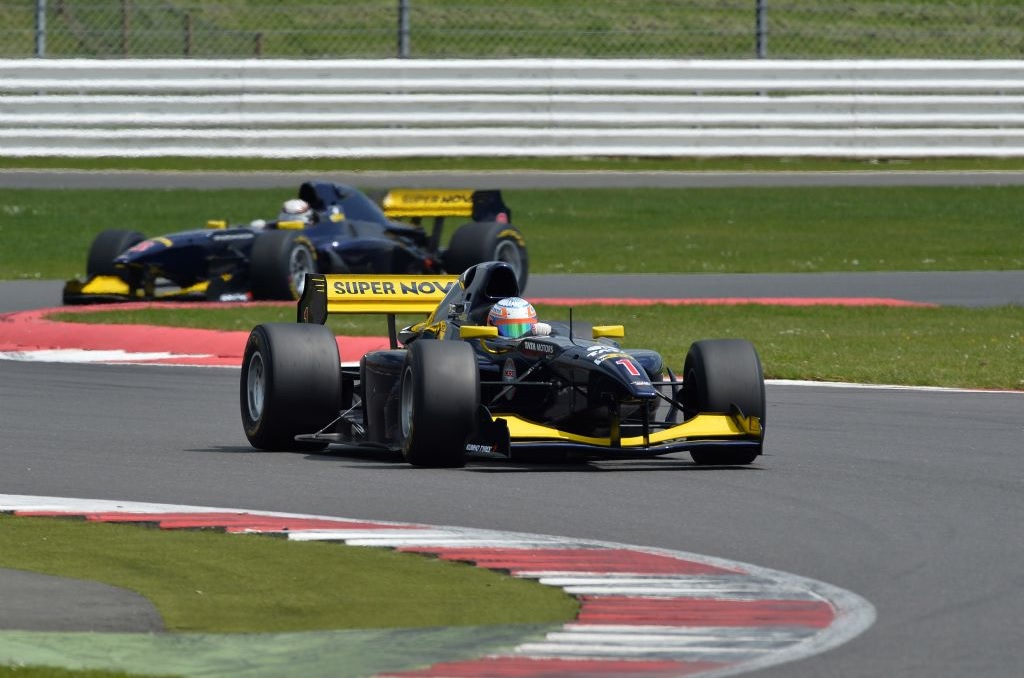
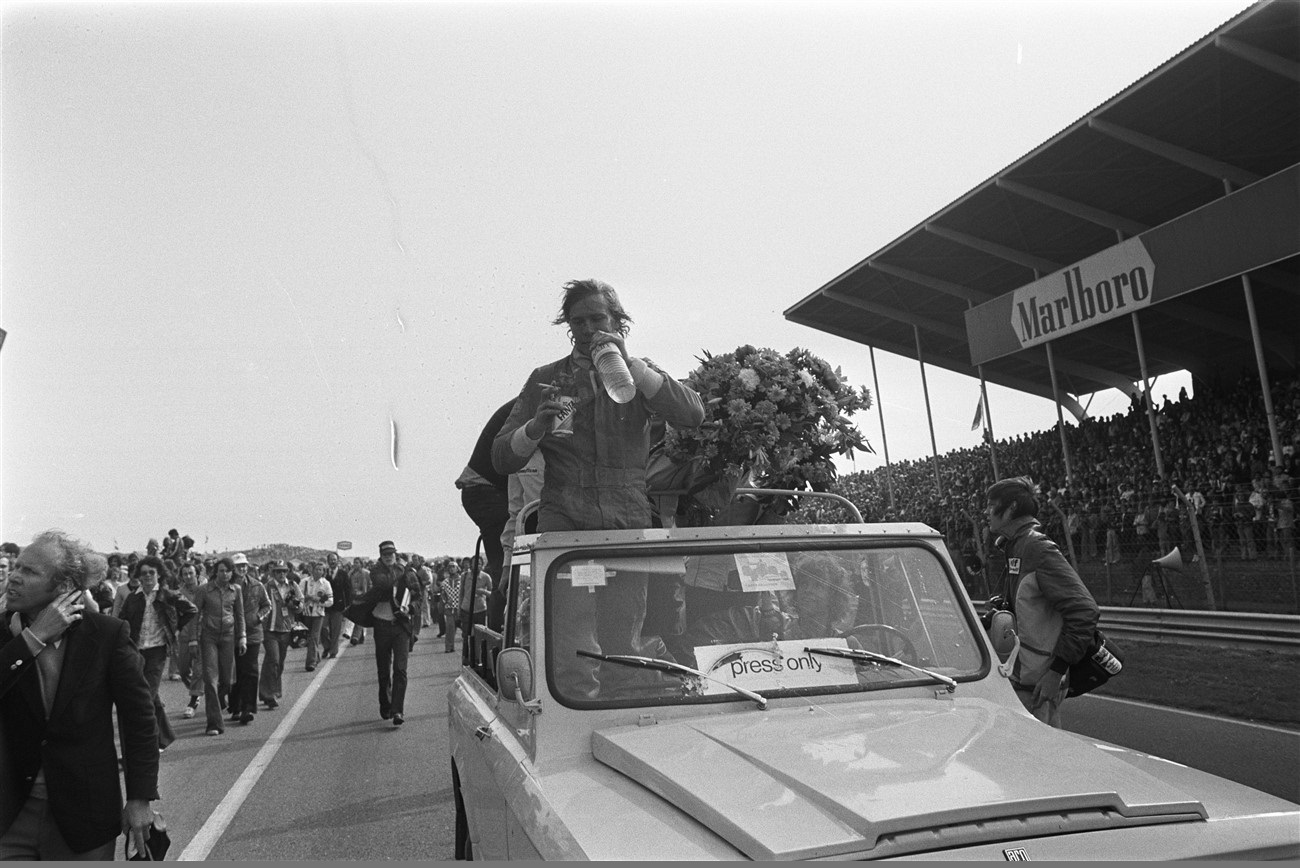
It is 2009 and the Formula One is in a deep crisis, a crisis they have not seen in years. The whole world got stuck in a deep financial crisis. Worse than the Internet bubble from 2000. The first signs of the crisis in the sport were in 2008. Super Aguri left in mid-season while Honda departed from the Formula One. Ross Brawn purchased the team, thanks to their double-diffuser took advantage, and won the championship. Toyota announced their goodbye while teams like Renault and Williams were struggling. Even BMW left the sport with Peter Sauber, with a symbolic 1 euro, purchased his team back to keep it in the Formula One. Luckily, there were four new teams to arrive! Campos, which became HRT before the start of the 2010 season. Lotus Racing, Virgin Racing and USF1, which was just a dream.
If you look back at it 16 years later, it is a strange chapter in the Formula One. In 2009, the FIA opened for application over 30 “teams” applied or announced their interest to enter the Formula One. Teams like Brabham, March, Lotus and Stefan Grand Prix are a few of the known names. Stefan Grand Prix is an interesting one as they purchased the assets from the Toyota team, including their challenger for 2010. Yet, while they applied, they were refused by the FIA, on reasons I still have questions about.
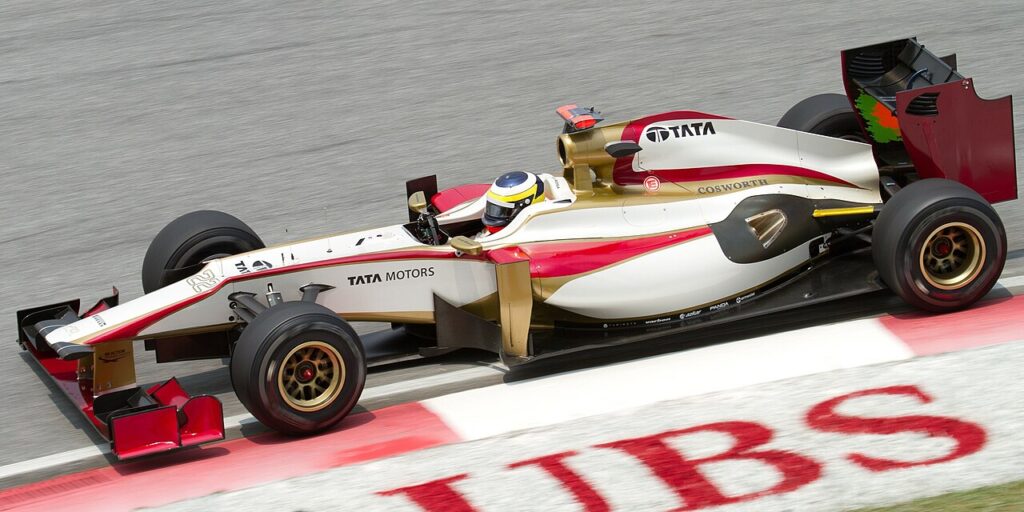
Campos/HRT The Spanish dream that became a terrible siesta
Luckily, the FIA choose four teams to enter in 2010. Teams, which seemed to have little to less financial backing if you look now at them. Campos Racing from Adrian Campos was one of the serious teams to appear on the grid. Campos Racing earned their entry if you look at their results and activities in the lower formulae series. However, before the start of the season the financial backing was critical and not enough to bring the team on the grid. Bernie Ecclestone himself had concerns. Before the start of the season, Campos disappeared. Luckily, there was the Spanish businessman José Ramón Carabante who purchased it and debuted the team as Hispania Racing in 2010, as it was their original name back then. Later it turned into HRT.
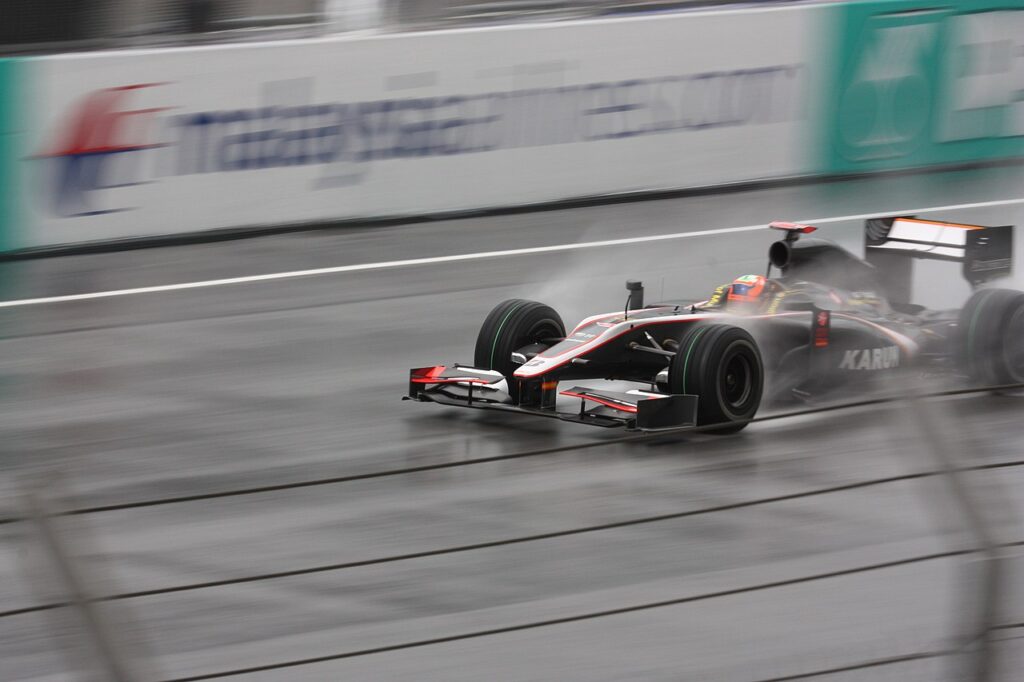
The start of the 2010 season saw Karun Chandhok and Bruno Senna debuting for the team. At that point, it was clear that the team still lacked the proper financial backing. While the start was somewhat good, Karun was replaced by Japanese driver Sakon Yamamoto who on his turn got replaced by former Red Bull superstar Christian Klien. Their best results were two 14th places. In 2011, the season started with double DNQ for the Australian Grand Prix. Narain Karthikeyan who returned on the grid got replaced after the European Grand Prix by Austrian Daniel Ricciardo. While another former Red Bull superstar, Vitantonio Liuzzi would race the full season for the team.
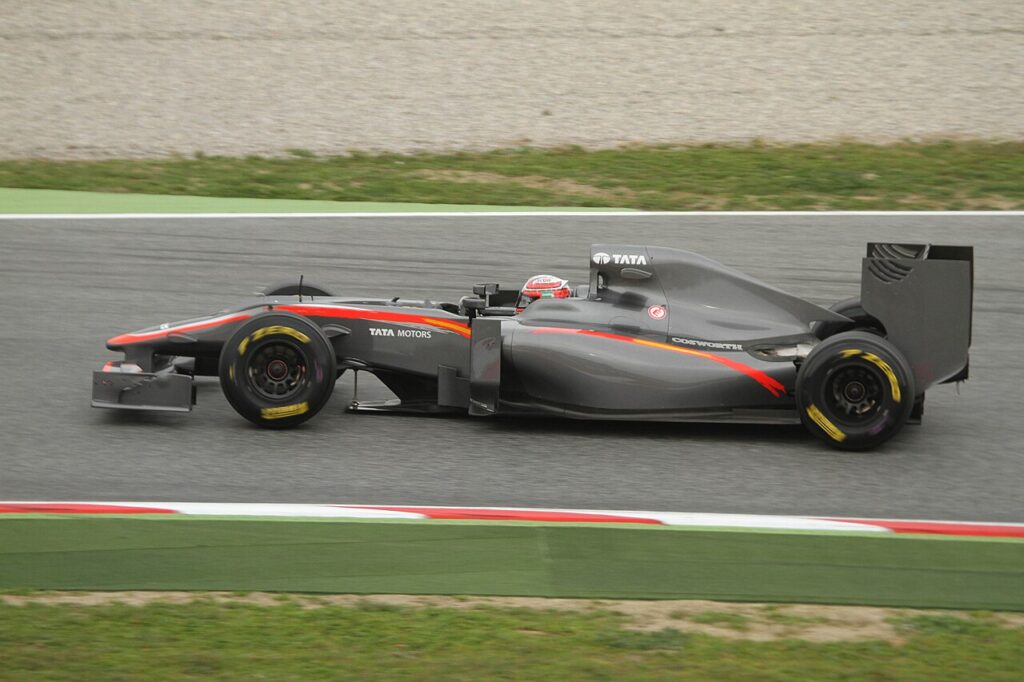
Sadly, for HRT the 2012 started as 2011. Pedro de la Rosa was their first driver while Narain Karthikeyan returned as well. They started with a double DNQ during the Australian Grand Prix. It was clear then that the team struggled badly. While Pedro and Narain finished most of the races with the F112 the competition and reliability from the other teams was just enormous. The team was looking for a buyer; the date was set the 30th of November as the fees had to be paid then for 2013. There was no buyer and the team disappeared. Leaving Josef Král without a debut in the Formula One.
Manor was the next Spanish attempt that could make it, became Russian and later British
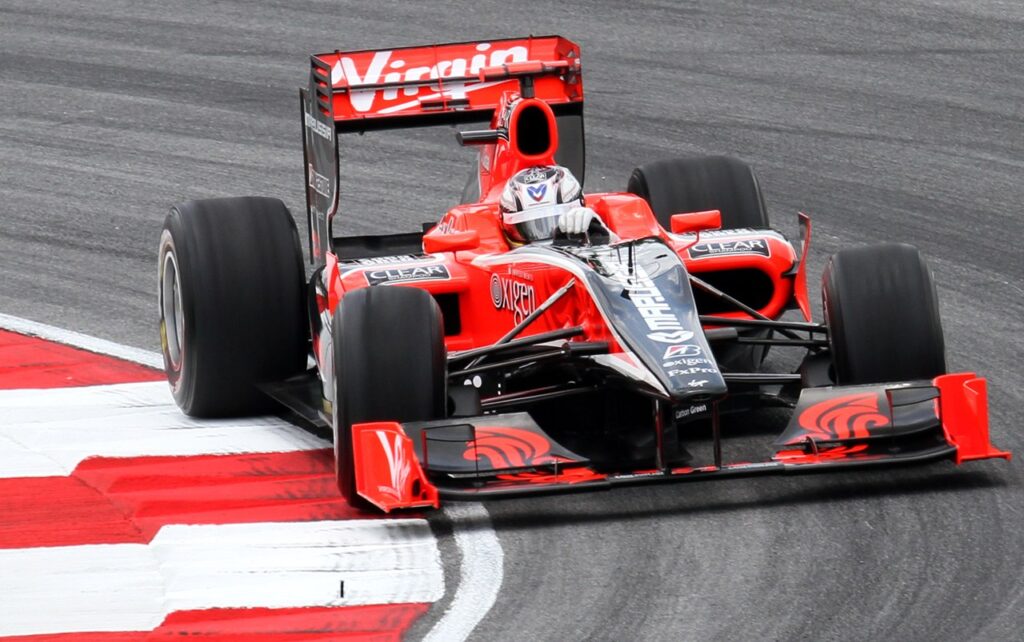
The other team that changed owners before it made it’s debut in 2010 was Manor Racing from John Booth and Nick Wirth. Manor was a competitive team in the F3 ready for a new adventure in the Formula One. Before the wages had to be paid for 2010, Richard Branson knocked on Manor’s door, purchased a huge amount of shares from a shareholder, and rebranded the team to Virgin Racing. Both Booth and Wirth would stay with the team. Nick Wirth designed the first car, the VR-01, purely with the use of CFD and interesting concept. Yet, it did not work out as they had planned. With Timo Glock and Lucas di Grassi they had a competitive drivers duo. However, they only managed to finish twice as 14th in 2010 as best results.
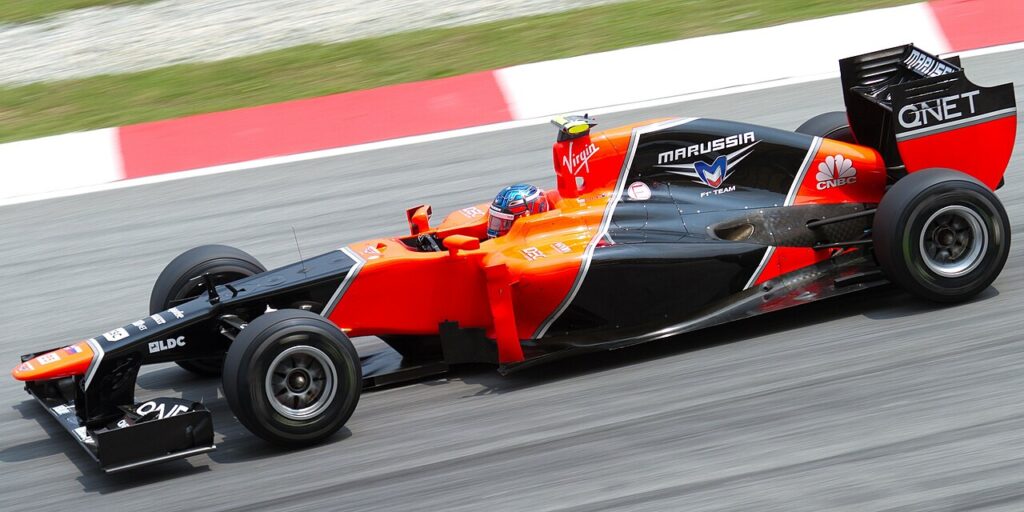
Thing would change for the team as at the end of the year Marussia Motors, a Russian company, purchased stakes in the team and became the main sponsor in 2011. The team’s name was now Marussia Virgin Racing. With the MVR-02, the team hoped for better days on the grid. Timo Glock stayed and was now joined by the Belgian driver Jérôme d’Ambrosio. It seemed no progression could be made with the MVR-02. The results were the same and mid-season Nick Wirth left the team. It gave Marussia the opportunity to start their in-house design for the 2012 season.
Everything seemed to change in 2012. You could say all the bad luck came to them. Virgin left the team, as main sponsor though would stay with the team. The team rebranded as Marussia F1 Team with a Russian license. In 2012, the FIA introduced the KERS system. While all the teams, including HRT, had this system on board Marussia did not. HRT would take the KERS system of their car after they failed to qualify in Australia. The MR01 failed the crash test and it was questionable if the team would appear on the grid after all.
In June that year, María de Villota had a horrible accident when she did straight line testing at Duxford Airfield. Timo Glock had signed a multiple-year deal with the team. He was joined by French Charles Pic. Charles Pic had the highlight of the year for the team setting the fastest time during the second free practice for the race at Spa. Disclaimer, only 10 drivers had set a time due to heavy rain. Their best results were twice a twelfth place.
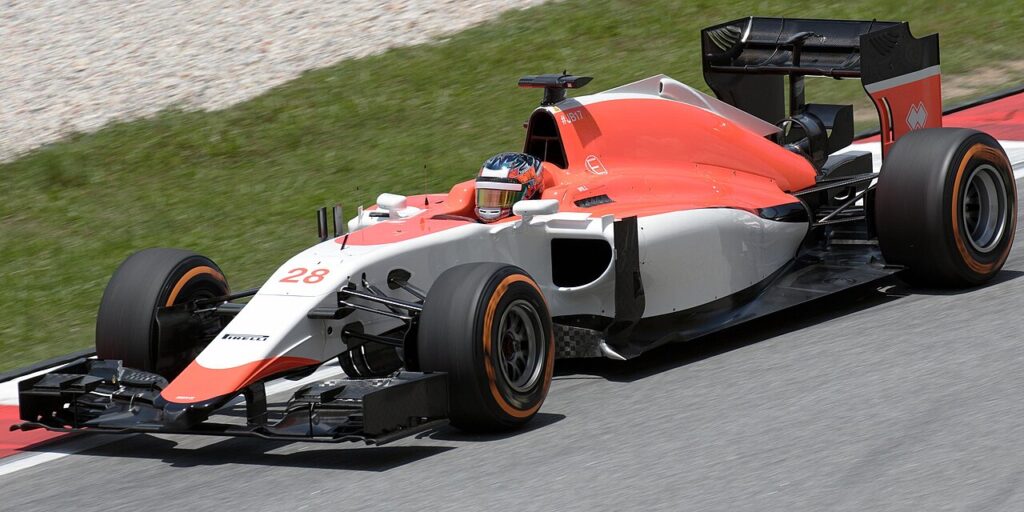
In 2013 it seems there was more air to breath Timo Glock had left the team for “commercial reasons” and got replaced by Max Chilton. Charles Pic was in first instance replaced by Brazilian driver Luiz Razia. However, he dropped out due to an issue with the financial backing. Therefore, Ferrari talent Charles Bianchi appeared in the Manor MR02. This was the entry for the team to be powered by Ferrari a year later. Cosworth had announced it would not build an engine for the 2014 regulations. In 2014, the team would finally show some progression, and would also leave the Formula One to return as Manor in 2015. Jules Bianchi finished as ninth during the Monaco Grand Prix, good for two points! Horror would struck the team in Japan when Jules died after colliding with a marshal crane tractor that was on its way to Sutil’s Sauber.
The next race at Sochi, Russia, the team was to let Alexander Rossi drive. However, they decided to race only with one car that race. Max Chilton’s car had special livery to support Charles with #JB17. Rumours stated that the team was somehow involved with the accident. The 25th of October when the FIA announced that both Marussia and Caterham were unable to qualify for the United States Grand Prix. At that time, it was not known that Marussia already filled in paper to go into administration. While optimism was within the team to appear at the final race in Abu Dhabi, to keep hopes for a 2015 entry the team did not appear. The MR04 that was already designed became the Haas in 2015.
However, the team bounced back and reported the 19th of February 2015 that they were out of administration and would continue racing as Manor Marussia F1 Team. John Booth and Graeme Lowdon continued running the team. This all was able due to Stephen Fitzpatrick who purchased the left overs of the team. Earlier in November 2014, the assets were sold, Gene Haas purchased it. The team had only one problem they had no new car, and asked to enter 2015 with their 2014 car. Only one team was against it, Force India from the notorious Vijay Mallya. Eventually the team was allowed to enter in 2015. They appeared with the MR03B an upgraded MR03. Will Stevens and Roberto Merhi were the drivers at the start of the season. During the opening race, the team was unable to start due to technical difficulties. Which is understandable if you look at the situation. More or less similar to Minardi in 2001 when Paul Stoddart purchased the team and did the impossible with designing and constructing the PS01. The season was so, so. Alexander Rossi also replaced Mehri for a couple of races. At the end of the season, John Booth and Graeme Lowdon left the team due to different views with team owner Fitzpatrick.
The team would continue racing in the Formula One in 2016. There was no more connection with Marussia and the team continued under the name Manor Racing. The team managed to contract former Ferrari employee Pat Fry as engineer consultant at it seemed there was a solid base. Young talent Pascal Wehrlein was announced besides Indian driver Rio Haryanto as their driver for 2016. During the Austrian Grand Prix, Wehrlein showed his talent by qualifying the MRT05 as 12th and would even score a point finishing tenth during the race. Rio got replaced by another the French driver Esteban Ocon. This happened due to contractual issues. However, Manor was again in financial troubles. The team announced in late December that there was a new investor found who would purchase the team. This never materialised and the team would not return. Even though the MRT07 was already finished and looked brutal!
The return of Team Lotus or was it Lotus Racing? And the debut of Caterham in the Formula One
Several historic former Formula One Team names did an application for the 2010 season. Such as March F1, Brabham and Lola Cars. Different people just the same names. One team sparked Team Lotus! The story starts with the F3 team Litespeed who applied for a place on the grid in 2010 using the Lotus name. They employed Mike Gascoyne to help them with the application. However, the sister company of the original Team Lotus was not willing to lent the name and even threatened to go to the court if they would use the name. This all in name lf “protecting” their name.
At that time Proton owned the company Lotus cars and was the holder of the name. David Hunt owned Lotus Ventures Ltd.
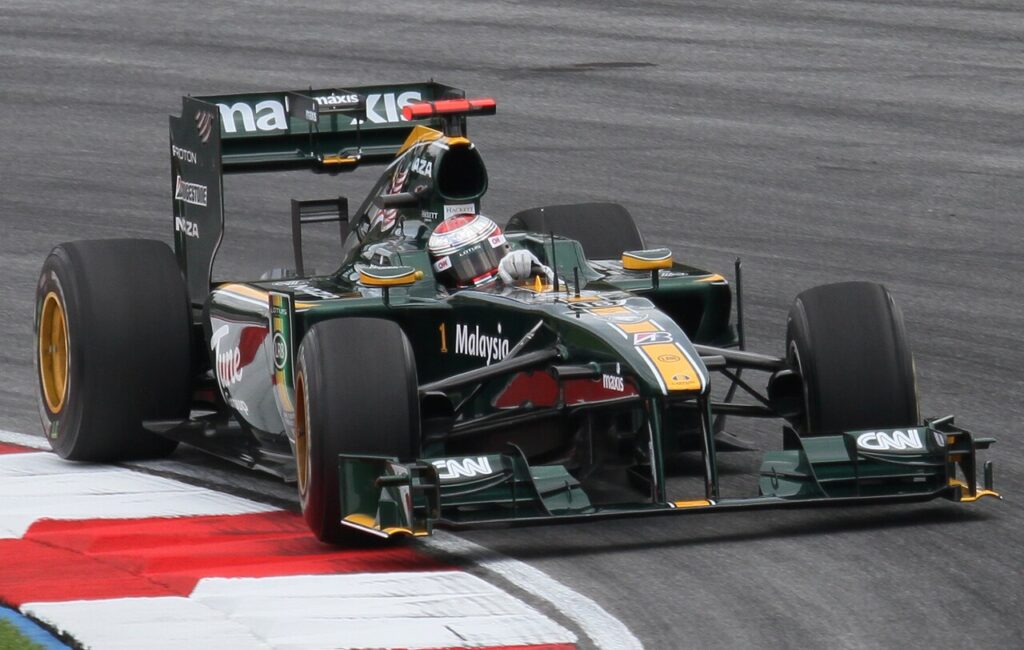
This did not mean that Team Lotus would not appear on the grid in 2010. However, they appeared as Lotus Racing. With the help of Tony Fernandes, who was already sponsoring Williams via AirAsia his airliner he would get involved with the Lotus team via Tune Group. There was another group called Naza group. Both formed a privately joint venture in collaboration with the Malaysian government. The name of this group was 1Malaysia Racing Team Sdn. Bhd. Also known as 1Malysia F1 Team. Proton allowed the new team to use the Lotus name, which meant that Lotus Racing would return in 2010! Mike Gascoyne became the teams’ technical director while Malaysian Fernandes became team principal. The line-up for 2010 was a strong one with Jarno Trulli and Heikki Kovalainen.
The T127 looked decent however; Lotus Racing had the same issue as the rest of the new teams. Both Trulli and Kovalainen out qualified them during most of the races. Cosworth powered them all and the reliability of the other teams was extremely high. Yet, they were the fastest of all the new teams on the grid in 2010 with their best result a twelfth and thirteenth place during the Japanese Grand Prix. During the British Grand Prix that year the team had switched from Lotus Racing to Team Lotus, they also announced they were to ditch the Cosworth engines in favour of the Renault engines.
At this point, it seemed Lotus Racing had the most momentum to become a serious team in the sport. In October 2010, they announced they signed a deal with Red Bull Technology for the supply of gearboxes and hydraulic systems for 2011 and onward. That same month they announced their plans to build a wind tunnel facility at their base as well plenty of Force India personnel moved to Lotus Racing. There were high hopes for next season. A mid-fielder ready to fight for points with their T128 and with Jarno Trulli and Heikki Kovalainen staying with the team.
Another big change was the name, in September 2010 Tony Ferandes agreed with David Hunt to acquire the name Team Lotus Venture Ltd. From him. Therefore, Lotus Racing would change their name to Team Lotus. This results in legal actions by Proton who stated that they owned the right to use the name Lotus in the automotive, so also the Formula One. The reason for this had partly to do with ART Grand Prix bidding for a place on the grid in 2011, though failed to secure the proper financial backing to do so. Lotus Cars on their terms was willing to help Art and bring Lotus back on the grid again. This would mean two Lotus teams. Eventually, this would happen with Renault. As Proton purchased a stake in the Renault team, and would become their title sponsor from 2011 onwards.
This was not the end of the legal dispute, while the Chapman family came with a statement in December 2010 that they did not want to see the name Team Lotus being used in the Formula One. Even David Hunt started a legal dispute against Tony Fernandes as he refused his contractual obligations when he purchased Team Lotus. Eventually Team Lotus would appear on the grid, with backing of David Hunt. Yet, while the legal battles continues, Fernandes had purchased Caterham, first stating that it would not be put under the banner of Team Lotus.
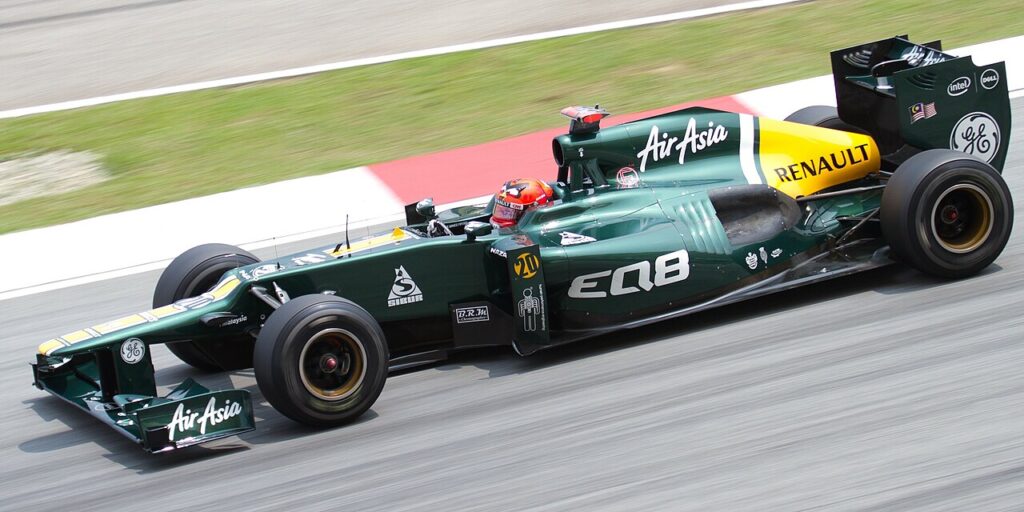
All the legal issues did not work out well on the tarmac, the team would score no points they scored a couple of thirteen places as a best result during the season. Time to leave the 2011 season behind and look forward. Team Lotus would disappear from the grid as now Caterham F1 Team appeared. Thanks to the acquirement of Caterham Cars by Fernandes earlier in 2011.
The 2012 season was a new start for the team. A new name and a somewhat new activity in the GP2. Where Caterham would use the GP2 for their own young talent. Only Will Stevens and Giedo van der Garde moved to the Formula One eventually. Drive like HIshamuddin, Canamasas and Morris we would not see on the grid at all.
While Jarno Trulli and Heikki Kovalainen resigned their contract with Caterham. However, Jarno Trulli himself terminated his contract. He was not happy with the progression the team made and felt it was time to go. To replace him the Russian driver Vitaly Petrov was contracted. The Caterham CT01 was the team’s first car that had KERS. While the pace was slow, at the beginning of the season, they quickly found pace and Heikki managed to appear become somewhat of a regular in Q2. In Brazil Petrov came close to score points when he finished as eleventh during the race. Good enough to end as tenth in the championship.
In 2013, again the drivers changed. Kovalainen left the Formula One while Petrov moved to Renault, which was now Lotus. Charles Pic and Giedo van der Garde were the drivers for 2013. The CT03 looked promising and Giedo qualified the car as fourteenth during the Belgian Grand Prix. While the car was quicker than the one from Marussia, they completed the season as eleventh. Which meant no extra income. At this point, the financial situation would worsen.
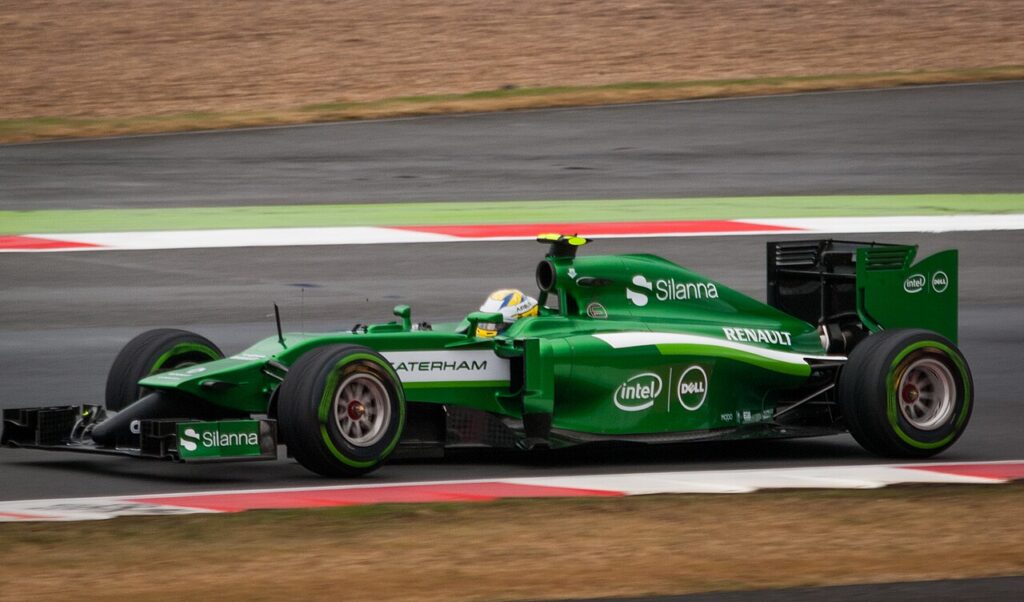
The team appeared with the CT05 at the start of 2014 season. Yet Again a complete new driver line-up for the team. Now with Swiss Marcus Ericsson and Japanese Kamui Kobayashi. Tony Fernandes at this point warned the team that if results would not improve he would leave the team and the sport. He could not have been more correct. The results did not improve, not a single point was scored during the first half of the season. This eventually happened in July 2014 when a Swiss consortium, advised by Colin Kolles, acquired the team from Fernandes. From this point, it went rapidly down the hill with the team. Former Jaguar test driver André Lotterer replaced Kobayashi during the Belgian Grand Prix. The next race Kobayashi was back in the car.
The situation became dire for the team during the season. For the team the Russian Grand Prix was, for now, the last Grand Prix Caterham appeared on the grid. The official announcement was made 21 October that year that the team went into administration and withdrew their management team. Bernie Ecclestone himself gave the team the permission to skip the races in the United States and Brazil. To give the team the time they needed to find another buyer. In-between Ericsson terminated his contract with Caterham in favour to race for the Sauber team. Surprisingly was the news that stated that Rubens Barrichello arranged 3-race deal with Caterham. He would have replaced Kobayashi. I still have in the back of my mind that this was more a publicity stunt to gain new sponsors.
Thanks to a crowdfunding program, at that time very popular, Caterham F1 Team would re-appear on the grid during the last race of the season at Abu Dhabi. Since this was the only time that a team appeared on the grid thanks to a crowdfunding. Kobayashi and Stevens would race for the team in Abu Dhabi. Stevens finished the race, as seventeenth and Kobayashi had to retire.
It was the last time Caterham would appear on the grid. While the FIA granted the usage of their 2014 car for 2015, the team did not find enough financial backing to compete in the Formula One. There were also former employees who took legal actions against the management team that took over with the help of Kolles. As cuts were made and resulted in unfair dismissal of at least forty team members.
However, Caterham already completed the design of their challenger for 2015. The CT07 looked sleek and promising. I wrote an article about it years ago.
USF1, the American dream that became a nightmare with a broken server since February 2010
There was one more new team in 2009 that granted an entry for the 2010 season. This was the USF1 team from Ken Anderson and Peter Windsor. It would have been an all-American team that had it’s operations as well in America. While the rest of the teams sorted in Europe. In February 2009 the duo made a statement of Speed TV that they would apply for an entry in 2010 with the team USF1 (US F1). The team had its operations in Charlotte, North Carolina. Sharing the building with Joe Gibbs Racing while a second place was announced at Motorland Aragón. This is a track in Spain near Alcañiz.
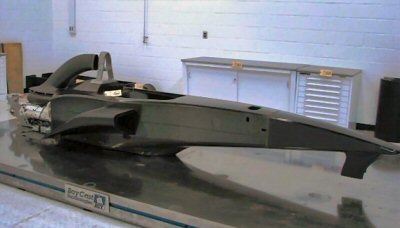
While the team was blasting from the roofs, they would appear on the grid in 2010 with an all-American team. It was Supremo Bernie himself who had doubts about the team appearing on the grid. The team was spare with giving information, questions raised and I recall myself questioning if this was a bad joke or not. José María López had signed a contract with the team to drive for them in 2010, while Rossiter was believed to have signed a contract as well. This has since never been confirmed. In some blogs, USF1 showed their challenger for 2010 in development. The car was “innovative” and not a copycat of the rest of the cars on the grid. Windsor himself stated that Chad Hurley (Youtube) would sponsor the team as well.
However, what we all thought in January 2010 happened in mid-February 2010. The reports came that USF1 was in imminent danger of collapse due to financial problems and the withdrawn of Hurley as backer. Ken Anderson had requested the FIA if the team could miss the first four races of the season. This all to gain new financers and continue working on the USF1 Type 1 car. The joke many came with is that USF1 only made a toaster. As well, the team stated on twitter the 18th of February that their server broke down. Two days later, it was over for the team. Only if the server never broke down!